
Meli
Arya wiradigunaSocial
4.22.00 Reviews
- Version
- 1.1.7
- Installs
- 100.00K
- Age Rating
- Teen
Screenshots

Our Review of Meli
 Analysis by Appyee
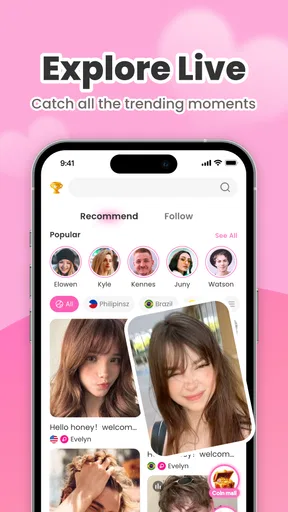
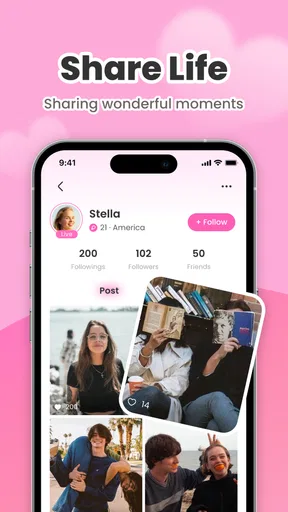
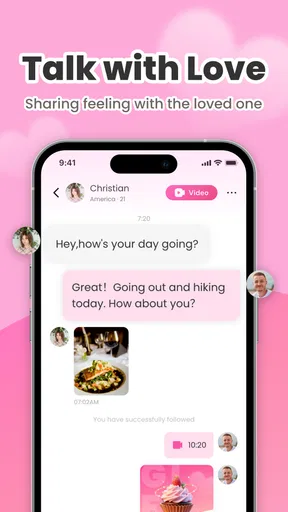
I approached Meli as a social app for people who enjoy live interaction rather than simply scrolling through finished posts. Its focus is a global live-streaming community where users can share talents, daily moments, and conversations, so the experience depends heavily on the people broadcasting at any given time. In my use, that makes it feel more like dropping into an unpredictable room than opening a carefully arranged social feed.
The app is free to install, which makes trying it fairly easy, although optional in-app purchases range from $0.99 to $99.99 per item. It is listed for Teen users and currently runs as version 1.1.7 on Android devices using version 7.0 or later. Arya wiradiguna is credited as the developer. Those details matter because Meli is accessible to a broad range of older Android phones, but the live format still depends on a reasonably stable connection and a device that can handle continuous video without becoming uncomfortable to use.
How Meli feels in everyday use
The most appealing part of Meli is its sense of immediacy. A recorded clip can be edited, retaken, and polished, while a live room gives you the chance to see a person responding in the moment. That difference is important if you are looking for conversation, informal performances, or a way to meet people around shared interests. I found the app more engaging when I treated it as a place to browse and participate, not as a replacement for every other social network.
A realistic use case is an evening when I have a short break and want something more interactive than watching a standard video. I can enter a live session, listen for a while, and decide whether the atmosphere suits me before saying anything. If the host is welcoming, joining the conversation can feel more personal than leaving a comment under a post that may never receive a reply. If the room is noisy, repetitive, or not relevant to me, leaving quickly is the sensible choice.
That last point is one of Meli’s central trade-offs. Live discovery can produce pleasant surprises, but it can also require patience. The app’s value changes with the quality and variety of the rooms available at the moment you open it. Someone who wants a predictable catalog with precise filters may prefer a conventional video platform. Someone who enjoys browsing into unfamiliar conversations may find the uncertainty part of the appeal.
I also think the app works best when users arrive with a clear social intention. You might want to share a skill, practice speaking with people from other places, follow a creator whose personality you enjoy, or simply spend time in a casual group setting. Without that intention, it is easy to move from one live room to another without building a meaningful connection. Meli offers the setting, but the quality of the experience depends on how actively you choose to use it.
A better way to explore live rooms
My first practical tip is not to judge the whole app from the first session. Live communities vary by time, audience, and host style. I would spend a few visits observing which rooms feel comfortable before deciding whether Meli belongs in my regular routine. This is more useful than assuming the most visible session represents the entire community.
A second useful habit is to separate watching from participating. New users may feel pressure to speak immediately, but listening first helps reveal the room’s tone, the pace of conversation, and whether the host actually acknowledges viewers. When I do decide to interact, a short, relevant message works better than trying to dominate the conversation. That approach also makes the app feel less overwhelming on a smaller phone screen.
For broadcasters, preparation matters even more. A simple subject, a quiet location, and a reason for viewers to stay can make a live session easier to follow. Meli’s format is not automatically entertaining just because it is live. A host who begins with a clear activity, such as demonstrating a talent or discussing a specific topic, gives visitors a better reason to remain than someone who waits for the audience to create the entire session.
There is also a social boundary worth keeping in mind. Live interaction can encourage quick familiarity, but I would not treat a friendly exchange as proof that someone is trustworthy. I recommend keeping personal details private until a relationship has developed safely and naturally. The Teen content rating makes this especially relevant for younger users and families deciding how the app should be used.
What the current release tells me
Version 1.1.7 suggests that Meli is still in a relatively early stage of its product life rather than being a deeply mature social platform with years of visible refinement. I see that as a reason to evaluate the app on its present experience instead of assuming it already has the polish or depth of much larger live-streaming services. The current build is the one that matters to someone installing it today, while future improvements remain expectations rather than promises.
The release date is listed as June 5, 2026, and the app has reached over 100K installs. Its average rating is 4.2 from 267 ratings, which points to a generally positive first impression among the people who chose to rate it. I would still read that figure with some restraint: a rating can indicate that the core idea works for many users, but it cannot tell me whether the available rooms match my interests or whether the social atmosphere will suit me.
Only two written reviews are associated with the listing, so the numerical rating gives less detailed context than I would normally want before committing to a social platform. In practical terms, that means I would test Meli personally rather than relying on the score alone. Live apps are unusually dependent on community behavior, and that cannot be measured fully by a small collection of written comments.
The developer, Arya wiradiguna, appears to be taking the straightforward route of presenting Meli around live community participation. I appreciate that the concept is easy to understand, but a simple premise places more pressure on execution. Discovery, room quality, conversation tools, creator consistency, and user comfort all need to work together. If one of those areas feels weak, the app can quickly become a collection of disconnected broadcasts instead of a community.
Who is likely to get the most from it
Meli is a good match for someone who likes meeting people through spontaneous video interaction and does not need every moment to be perfectly edited. It may also suit aspiring hosts who want a lightweight place to experiment with live presentation, especially if they enjoy performing, chatting, or sharing everyday activities. The global angle is useful for people who are curious about different personalities and communication styles.
I would be more cautious about recommending it to someone who mainly wants private messaging, a tightly controlled professional network, or a quiet way to consume content. Meli’s social value comes from public or community-oriented interaction, so it is not the natural choice for a user who dislikes being visible or prefers conversations with a small group of known contacts.
It is also not ideal for anyone who expects every session to provide immediate entertainment. A live community needs active hosts and viewers. Some visits may feel lively, while others may feel slow or less relevant. That is not necessarily a defect unique to Meli, but it is an important part of the format that a polished store summary cannot communicate.
Families should approach the Teen rating as a starting point for judgment, not as a guarantee that every interaction will suit every teenager. I would encourage younger users to avoid sharing identifying information, to leave uncomfortable rooms quickly, and to discuss in-app purchases before spending. These are sensible precautions for a live social environment, particularly when conversations involve strangers.
How it compares with familiar alternatives
Compared with a traditional social feed, Meli feels less predictable and more immediate. A standard feed is usually better when I want to catch up quickly, revisit a post, or control exactly what I consume. Meli is stronger when I want the possibility of a direct response and the atmosphere of a live gathering. The trade-off is that live content demands more attention and may not fit neatly into a short, controlled browsing session.
Compared with established live-streaming platforms, Meli’s main attraction is its focused community concept rather than a long history or a huge ecosystem that I can assume will meet every need. Larger alternatives may be preferable for viewers who want a broad range of professional broadcasts, extensive creator archives, or mature discovery tools. Meli can be more appealing to someone who wants to explore a newer community without bringing expectations formed by the biggest names in the category.
Private chat apps are better when the priority is dependable one-to-one communication. They give me more control over who can contact me and when a conversation happens. Meli is better suited to shared visibility and live presence. Choosing between them depends less on which app is universally better and more on whether I want a room full of people or a conversation with someone I already know.
One non-obvious trade-off is the relationship between accessibility and depth. Support for Android 7.0 or later makes the app available to many older devices, which is helpful for users who do not upgrade phones frequently. At the same time, live video can still be demanding in practice, especially during long sessions. A device may technically support the operating-system requirement while offering a less comfortable experience because of battery use, heat, or limited performance.
Costs, attention, and sensible usage
The free entry point is one of Meli’s strongest practical advantages. I can install it, explore the community, and decide whether the live format fits me before spending anything. That lowers the risk compared with an app that requires payment before I understand its atmosphere.
However, optional purchases deserve deliberate handling. The broad range, from $0.99 to $99.99 per item, means I would never tap through a purchase casually, especially during an emotionally engaging live session. A small contribution can feel harmless in the moment, but repeated support can become difficult to track. I recommend setting a personal limit before entering rooms where gifting or other paid interactions may be part of the experience.
This is another area where Meli differs from ordinary social browsing. Live sessions create a stronger feeling of presence, and that can make spending feel like a direct social response rather than a normal transaction. I would treat purchases as optional entertainment spending, not as a requirement for being welcomed or noticed. If the app ever makes me feel that participation depends on paying, I would leave the room rather than continue.
Time management matters too. Because live content has no obvious endpoint, it is easy to keep checking for the next interesting moment. I get better results by deciding whether I have ten minutes or an hour before opening the app. That small boundary keeps Meli enjoyable and prevents an unplanned session from replacing tasks I actually needed to finish.
Remaining gaps I would want addressed
The biggest current limitation is the uncertainty that comes with a developing community. A strong live app needs enough variety to make returning worthwhile, and users need reliable ways to find rooms that match their interests. If discovery feels too dependent on chance, viewers may stop exploring before they find the people they would genuinely like to follow.
I would also like to see continued attention to the experience of quieter users. Live platforms can favor confident hosts and fast-moving conversations, while newcomers may struggle to feel included. Small design decisions around room context, participation, and returning to preferred communities can make a major difference, even though they are less visible than the live video itself.
Another gap is the balance between openness and comfort. A global community benefits from meeting unfamiliar people, but it also needs clear expectations for respectful behavior. I would pay close attention to how Meli evolves in the areas that help users manage unwanted interactions and make informed choices about where they spend time. Those details often determine whether a social app becomes part of a routine or gets uninstalled after a few uncomfortable visits.
The limited written feedback also means potential users have less detailed guidance from the community than they might find for a long-established service. That is not a reason to reject Meli, but it does make a short personal trial more important. I would install it with modest expectations, explore several different sessions, and only then decide whether the community offers enough value for regular use.
What I will be watching as Meli develops
For future releases, I would watch whether the app becomes easier to navigate without losing its spontaneous character. Better organization can help users find suitable rooms, but too much structure could make the experience feel like an ordinary catalog. The best evolution would preserve the surprise of live discovery while giving viewers enough context to make good choices.
I would also look for signs that existing users can build continuity. A live community becomes more valuable when returning viewers can recognize hosts, remember useful conversations, and feel that their participation has a place over time. That does not require Meli to copy larger platforms; it requires the current live interactions to connect into something more lasting.
Finally, I would judge future updates by how they affect trust. A social app can add features quickly, but users stay when the environment feels understandable and manageable. Clear handling of paid interactions, respectful participation, and the needs of Teen users will matter as much to me as new ways to broadcast. Product evolution should improve confidence, not merely add more activity.
My overall view is positive but measured. Meli gives live social discovery a simple, approachable entry point, and I can see its appeal for people who want spontaneous conversations, talent sharing, and a more immediate sense of community than a normal feed provides. Its free installation and broad Android compatibility make experimentation easy, while the current rating of 4.2 suggests that the basic idea is resonating with many early users.
Still, I would not recommend it blindly to everyone. The experience depends on the rooms available, the quality of interaction, and the user’s willingness to explore without guaranteed results. People who want privacy, predictable content, or highly mature tools may be happier with a familiar alternative. For me, Meli is worth trying when live connection matters more than polished certainty. I would use it with sensible spending limits, protect personal information, and give the community enough time to show whether it can become a place I return to rather than just another app I briefly browse.
Verdict
Strengths of Meli
- Convenient shopping, payments, and account management in one app.
- Personalized recommendations make it easier to discover relevant products.
- Order tracking provides useful updates from purchase to delivery.
- Mercado Crédito can offer flexible payment options to eligible users.
- Buyer protection helps resolve certain issues with purchases.
Limitations of Meli
- Some features and payment options vary significantly by country.
- Promotional notifications can become frequent without careful settings.
- Seller quality and product authenticity may differ between listings.
- Credit and installment offers may involve fees or eligibility limits.
- Customer support response times can be inconsistent during disputes.
Similar Picks in This Category
View All
Meta Platforms, Inc.4.6

Instagram4.0

Likee-Live, Chat & Party Games
Likeme Pte. Ltd.4.4

Facebook Lite
Meta Platforms, Inc.4.5

TikTok - Videos, Shop & LIVE
TikTok Pte. Ltd.4.0

Moj: Free Short Drama & Reels
ShareChat4.1
Frequently Asked Questions
What is Meli and what can I use it for?
Meli is a mobile shopping and marketplace app that lets users browse products, compare offers, place orders, and manage purchases from their phone. Depending on your location, it may also provide access to sellers, delivery services, promotions, payment options, and order tracking. The available catalog and features can vary by country, so checking regional availability before downloading is recommended.
Is Meli safe to use for shopping and payments?
Meli includes account security features and payment tools designed to make online purchases more convenient, but users should still follow normal safety practices. Download the app from an official store, use a strong password, avoid sharing verification codes, and review seller ratings before ordering. Payment protection, refunds, and buyer support may depend on the product, seller, and local terms.
Does Meli charge delivery fees or additional costs?
Delivery charges on Meli can vary according to the seller, product size, shipping method, destination, and current promotions. Some listings may include free or discounted delivery, while others add shipping costs during checkout. Taxes, service charges, or import fees may also apply in certain regions. Always review the final order summary before confirming payment.
Can I return an item or request a refund through Meli?
Meli generally provides an order support process for products that arrive damaged, differ from the description, are incomplete, or do not arrive as expected. Return windows and refund conditions can differ by country, category, seller, and payment method. Before purchasing, read the listing details and return policy carefully, and keep packaging and evidence if you need to open a claim.
What devices and permissions does the Meli app require?
Meli is available for supported Android and iOS devices, although compatibility can depend on the operating system version and region. The app may request permissions for notifications, location, camera, or storage to support delivery updates, address services, barcode or image features, and customer support. You can usually manage these permissions in your device settings, but restricting some may limit specific functions.
